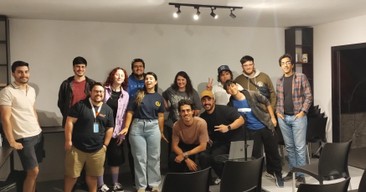
Angular MVD Meetup – November, closing out the year
On November 18th we once again had the pleasure to host Angular MVD at our offices

For years, U.S. tech companies were told that the talent crisis would solve itself. AI would replace experience. Bootcamps would fill the gap. Market forces would restore balance.
In 2026, the reality is different. The problem is not a lack of developers, but a shortage of senior, production-ready engineers who can operate autonomously and architect scalable solutions with long-term viability.
This shift has pushed many organizations to evaluate the best staff augmentation country in Latin America for U.S. tech companies—one that offers seniority, reliability, and long-term operational stability.
The same nations are typically mentioned when American businesses look into IT staff augmentation services in Latin America. They all offer clear advantages, yet each one serves a different strategic purpose depending on team needs and delivery expectations.
Seniority issues cannot be resolved by volume alone. Uruguay typically performs better than larger markets for teams that require autonomy, architectural thinking, and reliable delivery.

Junior and mid-level developers are still produced in large quantities in the United States. Engineers capable of working autonomously in actual production settings are lacking.
This disparity is evident in positions like:
The issue frequently goes unnoticed during the hiring process. Months later, it manifests as a slowdown in speed, an increase in rework, and missed deadlines. Adding headcount at that stage changes nothing. Experience is what makes the difference.
The experience curve was supposed to be flattened by AI. Actually, it had the opposite effect.
The greatest benefits occur when AI supports seasoned engineers rather than when it takes the place of judgment. Architectural errors become apparent sooner due to faster feedback loops, and there is far less opportunity to "learn by breaking things."
Today:
AI eliminates the safety net for teams with a large number of juniors. Seniority has migrated upstream rather than diminished in significance.
On spreadsheets, offshore development still appears appealing due to its established vendors, big talent pools, and cheaper costs.
In reality, many teams encounter friction rather than savings. The actual barrier in execution speed is caused by lengthy feedback loops, misaligned timetables, and delayed decisions.
Time-zone misalignment slows teams down and raises coordination expenses, according to research published in the Harvard Business Review. Cost arbitrage by itself is ineffective when speed is a factor.
The practice of nearshoring is no longer experimental. The Inter-American Development Bank claims that it is currently a key factor in the economic integration of the United States and Latin America, particularly in the area of technology.
The benefits are useful:
Uruguay has a combination of long-term stability, time-zone alignment, and senior technical talent that is hard to match.
Uruguay has one of the largest concentrations of IT experts per capita in Latin America, despite its small size. Senior engineers frequently have years of experience working with global production systems and solid academic backgrounds.
Important differentiators consist of:
This is something that many teams discover the hard way.
According to Gartner research, concentrating just on hourly rates underestimates coordination overhead, rework, and turnover. The total cost of ownership presents a distinct picture.
Price is not as good as predictability. Uruguay constantly excels in this area.
Not every circumstance calls for nearshoring to Uruguay, and this is deliberate.
It functions well when teams need senior engineers integrated into their main processes, particularly in:
Another model would be more appropriate if the problem is pure capability rather than judgment and autonomy.
The same stacks that American teams use on a regular basis are used by Uruguayan engineers:
DevOps: cost efficiency, observability, Docker, Terraform, CI/CD
These are not keywords for a resume. They are abilities related to production.
Solcre collaborates with American businesses in:
The World Economic Forum claims that AI-enhanced workflows and remote teams are becoming the norm.
There is a structural scarcity of senior talent. AI will change jobs, but it won't take the position of engineers who have a thorough understanding of systems. Early adaptation gives teams a quantifiable edge.
We don't function as an outside merchant at Solcre. We function as an extension of the engineering teams of our clients.
Uruguay's ownership culture is the reason we established our foundation there. Long-term system health, product choices, and architecture are all influenced by our engineers.
They work closely with American teams and are accustomed to working in production settings. In the first few sprints, this usually becomes evident.
Our objective is straightforward: assist you in scaling without the typical compromises. The output of three engineers is equal to that of three engineers without the additional cost of coordination overhead or ramp-up friction.
They work in your time zone and are integrated into all of your activities, including architecture conversations, sprint planning, code reviews, and standups. This is not an external delivery pod; rather, it is an embedded staff augmentation.
Usually between $40 and $80 per hour, depending on seniority. Teams experience lower total cost of ownership through decreased attrition and increased production, even though it is not the most affordable option.
The majority of clients onboard candidates in three to four weeks after reviewing them in one to two weeks.
The engineer is changed at no extra cost if there is a fit problem within the first 30 days.
Because it allows teams to grow without compromising speed or quality by combining senior technical expertise, real-time collaboration, excellent English proficiency, and institutional stability.
It can be worthwhile to reconsider nearshore personnel augmentation in Latin America if your team is experiencing seniority gaps, lengthy hiring processes, or delivery pressure.
With Uruguayan senior-first engineers designed for actual production work rather than merely headcount, Solcre assists U.S. businesses in growing.
On November 18th we once again had the pleasure to host Angular MVD at our offices
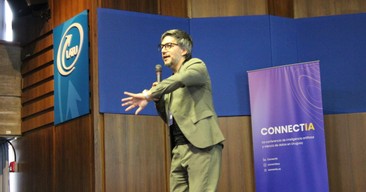
We had the honor of being the main sponsor of one of the most important artificial intelligence events in the country.
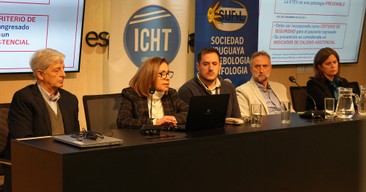
On July 24th, we launched the application for the national clinical registry of Venous Thromboembolic Disease (VTE), developed together with ICHT and led by Dr. Cecilia Carrizo.
How can we help you take your idea to the next level?
Let’s talkContact us
Get in touch.